
Architecture
wcvm runs a Node.js project inside one browser tab, with no backend. This page explains how: which threads exist, how they talk to each other, and why it is built this way. The source of truth, with the diagrams as Mermaid, is ARCHITECTURE.md.
1. The problem and the idea
A browser tab cannot spawn processes, has no synchronous filesystem, and never lets the main thread block. Node programs expect all three. wcvm's answer:
- A process is a Web Worker. One worker per PID, with its own memory and its own event loop.
- A blocked call is
Atomics.wait. Guest code callsreadFileSync; the worker writes a request into aSharedArrayBufferand parks. Another worker answers into the same buffer and wakes it. This is the one trick everything else rests on (and why the page must be cross-origin isolated). - Node's own JavaScript is the runtime. Node's
lib/is vendored unmodified; wcvm supplies only what is native in real Node (theinternalBindinglayer, an event loop, a module loader). - The network is virtual.
net/httptalk to other sandbox processes through the kernel; a Service Worker lets an<iframe>reach a sandbox server.
2. System overview
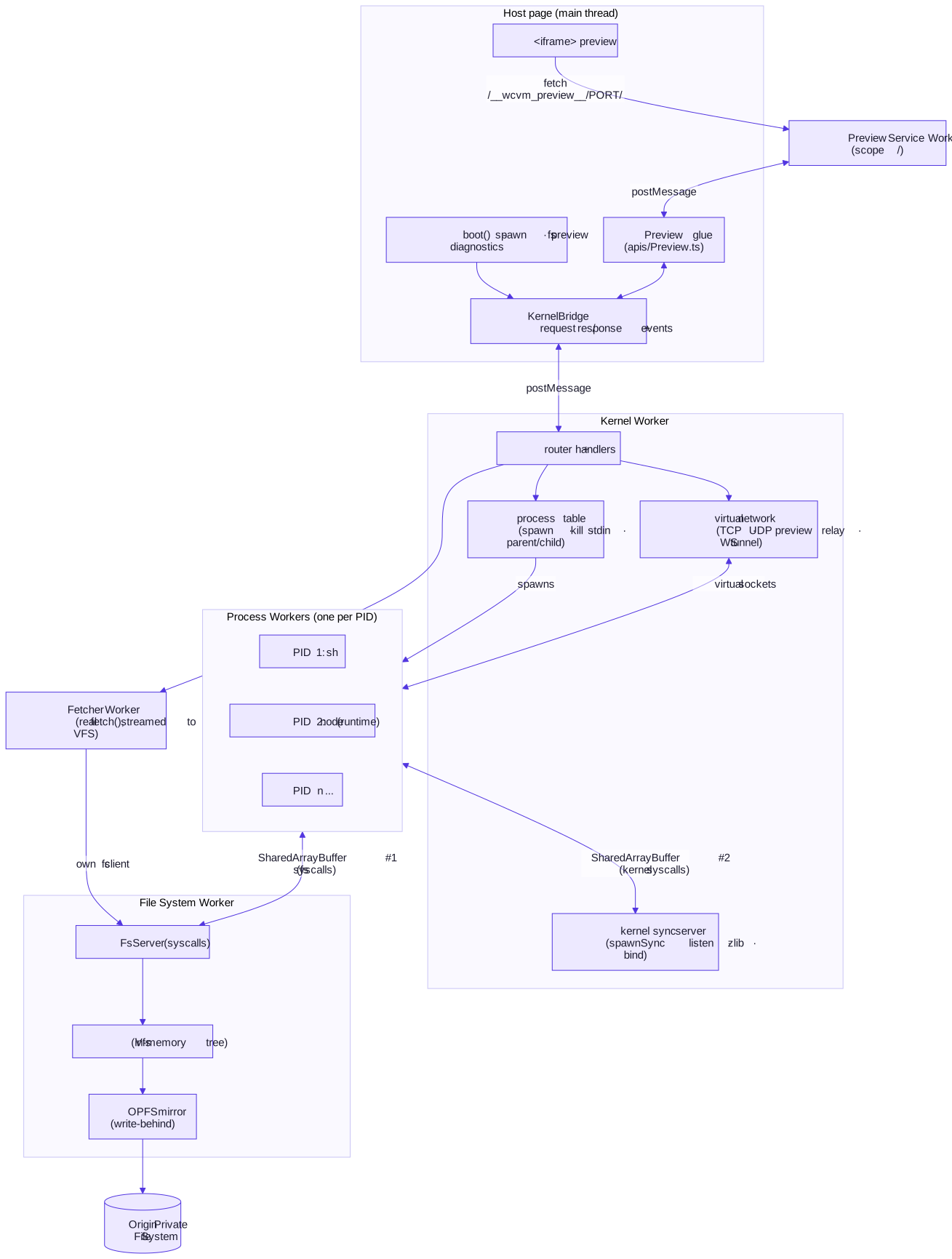
| Thread | Source | Responsibility |
|---|---|---|
| Host page | src/boot.ts, src/apis/, src/bridges/ | The public API; turns calls into messages to the kernel and events back into streams. |
| Kernel Worker | src/workers/kernel/, src/kernel/ | Owns the process table, the virtual network, preview relay, the fetcher, and a blocking fs client of its own. |
| File System Worker | src/workers/fs/, src/fs/ | The only owner of the Vfs; services every filesystem syscall; mirrors to OPFS. |
| Process Worker (per PID) | src/workers/process/, src/programs/, src/runtime/ | Runs one program (echo, sh, npm, node, ...). node hosts the vendored Node runtime. |
| Fetcher Worker | src/workers/fetcher/ | Real fetch() calls (up to ~10 at once), streamed straight into the VFS. |
| Preview Service Worker | src/workers/preview/ | Intercepts /__wcvm_preview__/<port>/... and relays it to a sandbox server. |
3. Boot
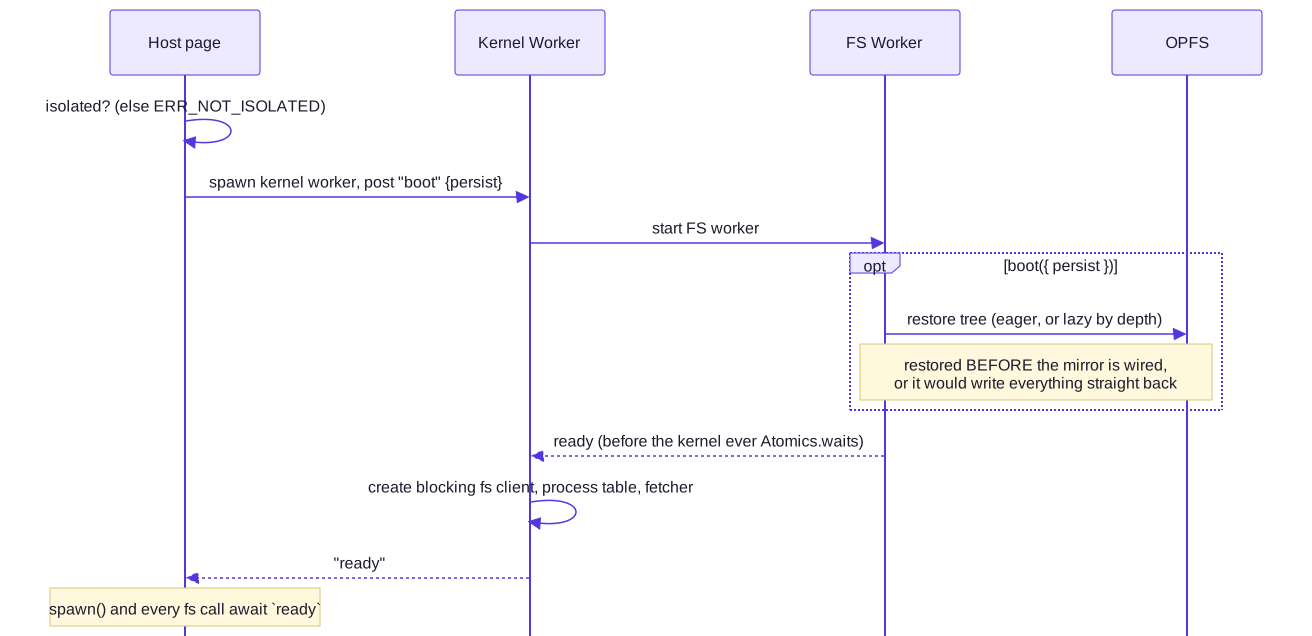
boot() itself is synchronous: it subscribes to ready first, then posts boot, so the message cannot be missed.
4. The synchronous syscall bridge
This is the core mechanism (src/protocols/syscall.ts, src/fs/fsClient.ts).
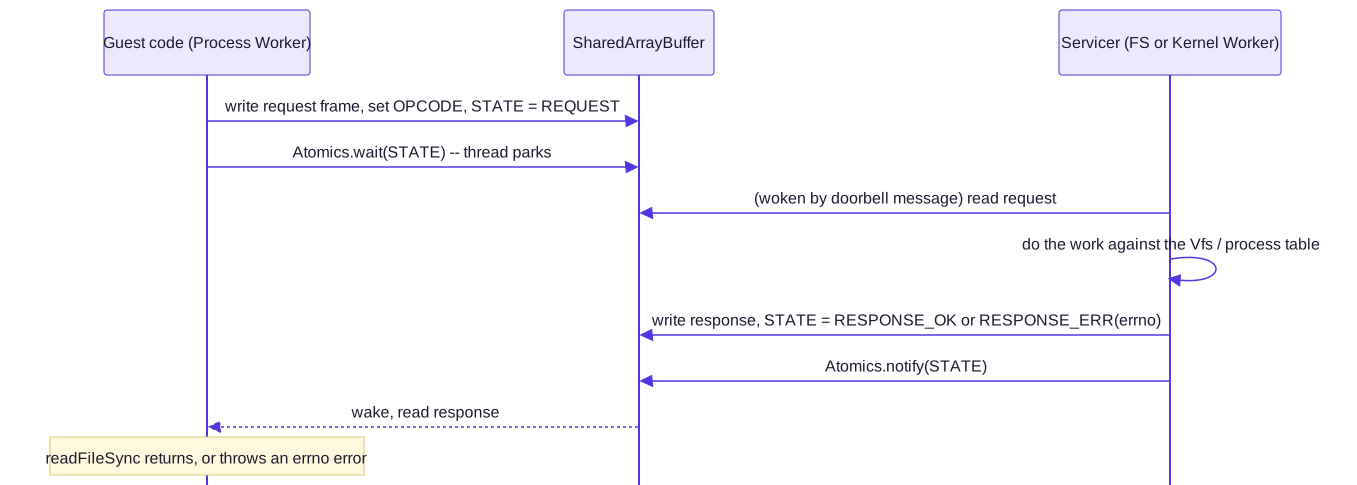
One buffer per client, laid out as a 24-byte control block (STATE, OPCODE, REQ_LEN, RES_LEN, SIGNAL, padding) followed by a 1 MiB data window. A request is [flags][fieldCount]( [len][bytes] )*; an error response carries the errno string.
Rules that follow from it:
- Everything must fit the window. Larger reads/writes are chunked by the client (
fs/fsClient.ts); an oversize request throwsEMSGSIZE. - Each process gets two buffers. The first goes to the FS Worker (opcodes
OP_READ_FILE...OP_CP). The second goes to the Kernel Worker (opcodes>= 64:spawnSync,net.listen,zlibsync,udp.bind), because process supervision lives there. - Out-of-band events never use the buffer. stdout, stderr, exit and incoming network data are
postMessages: a parked worker cannot receive messages, so the buffer is only for calls the guest is waiting on. - The kernel must not
Atomics.waitbefore its nested workers report ready, or it deadlocks them. protocols/syscall.tsmust stay dependency-free and use erasable TypeScript only, so it can be imported as-is by Nodeworker_threadsin tests.
5. Processes
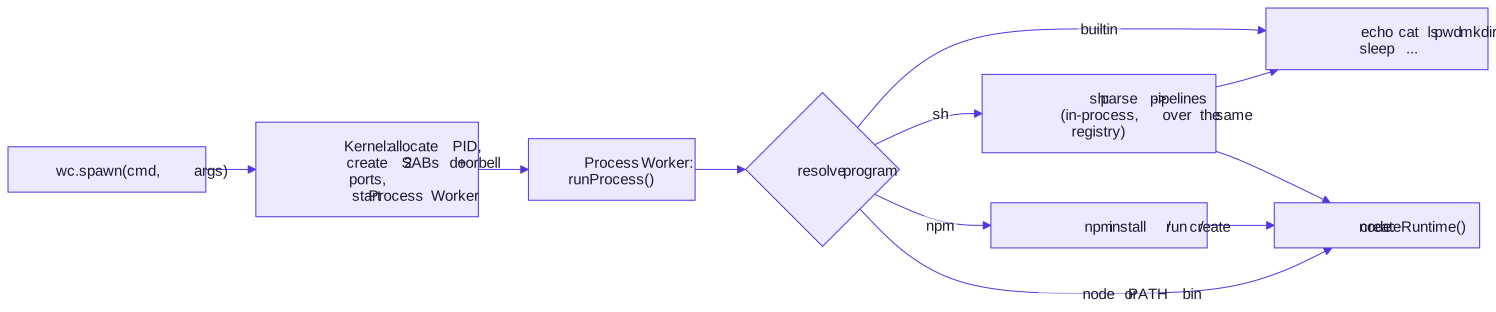
- Streams. stdout/stderr are
postMessaged to the kernel and on to the host (or, for achild_processchild, to the parent's worker). stdin is open until closed and is delivered the same way (writeStdin/endStdin). - A shell runs its commands in-process.
sh,npm runandnodecalled from them execute inside the same worker. That is why there is noSIGINT: interrupting one would leave its listeners and globals behind in the shell's worker. Killing a process is terminating its worker. child_processstarts a real new Process Worker, supervised by the kernel throughparentPid;fork()adds an IPC channel. Killing or exiting a process kills its whole subtree, since a child has no parent left to answer to.- Ordering on kill: terminate the worker before detaching its fs client; the fs server closes a client's open fds when it is unregistered, and the other order leaks them.
worker_threadsrun over realMessageChannels; the kernel mints thread ids.
6. The Node runtime (src/runtime/)
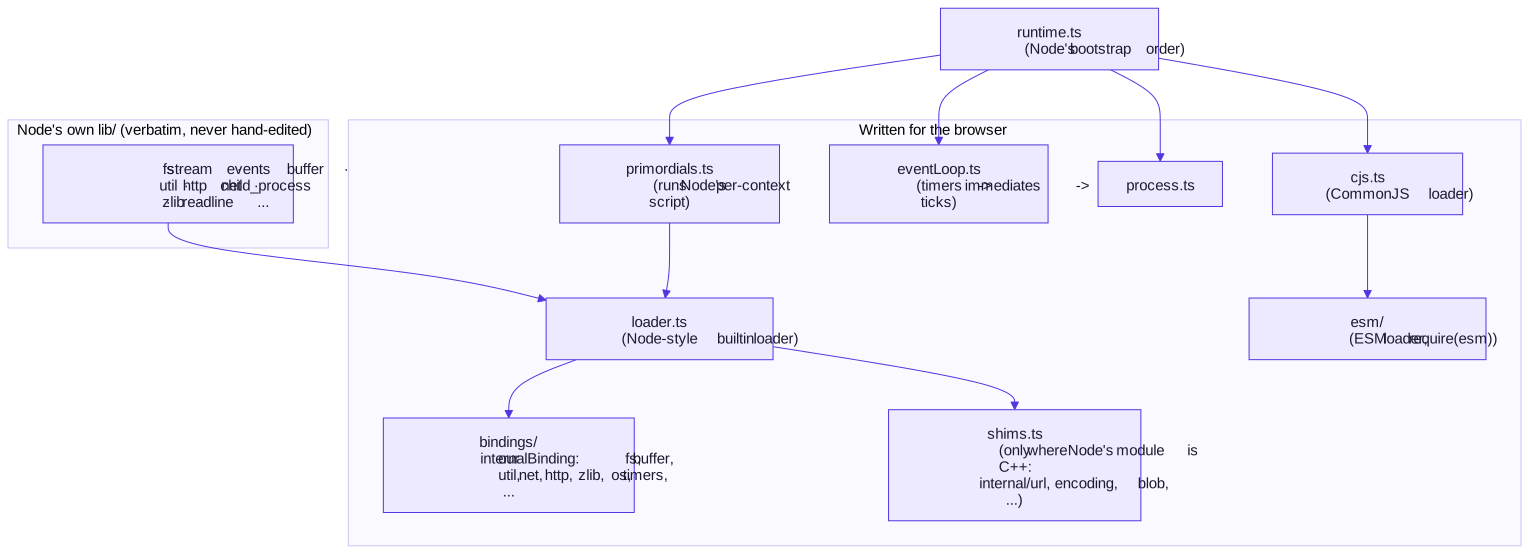
Path B: vendor, don't reimplement. src/runtime/node/lib/** is generated by scripts/vendor-node-lib.mjs from node/manifest.json and pinned by vendor.lock.json (sha256 per file, re-checked by a test). Because it is Node's code, behaviour and error messages match Node's; the work is in the bindings, which must return Node's exact values and error codes. Only a module that is C++ or a C++ parser (internal/url, internal/encoding, internal/blob, ...) is hand-written (shims.ts).
Module loading.
- CommonJS (
cjs.ts):node_modulesandpackage.jsonmain/exportsresolution (includingPATTERN_KEY_COMPARE), JSON, cycles. - ESM (
esm/): the loader resolves the static import graph itself with Node's algorithm, parses each module with Node's vendored acorn, rewrites specifiers toblob:URLs, and lets the browser's ownimport()link and run them - so live bindings, top-levelawaitand circular-import semantics are real. A strongly-connected component of the graph (a cycle) is merged into getter-based bindings (esm/cyclic.ts) because a Blob's content is fixed at creation.import.metais rewritten to the module's realfile://URL. require(esm)(esm/syncRequire.ts): like Node 24, an ES module can berequired synchronously; it is rewritten into a function body over a synchronous import, and top-levelawaitraisesERR_REQUIRE_ASYNC_MODULE.
The event loop (eventLoop.ts) models libuv's phases and reference counting: a handle that is ref'd keeps the process alive, and the loop only exits after microtasks drain and it confirms idleness. Native work (fs callbacks, sockets) re-enters it through loop.post().
7. The virtual network and preview
net, dgram and http are Node's real modules over bindings that route through the kernel (kernel/netServer.ts): listen() registers a virtual port, connect() creates an in-kernel connection, data flows by postMessage. A connection has two ids, one per endpoint, because both ends can live in the same process (a script that serves and requests itself): a process keys its sockets by id, so a single shared id made the two sockets collide. http adds a hand-written HTTP/1.1 wire parser (runtime/bindings/httpParser.ts) in place of llhttp. There is no real network: sandbox processes only reach each other.
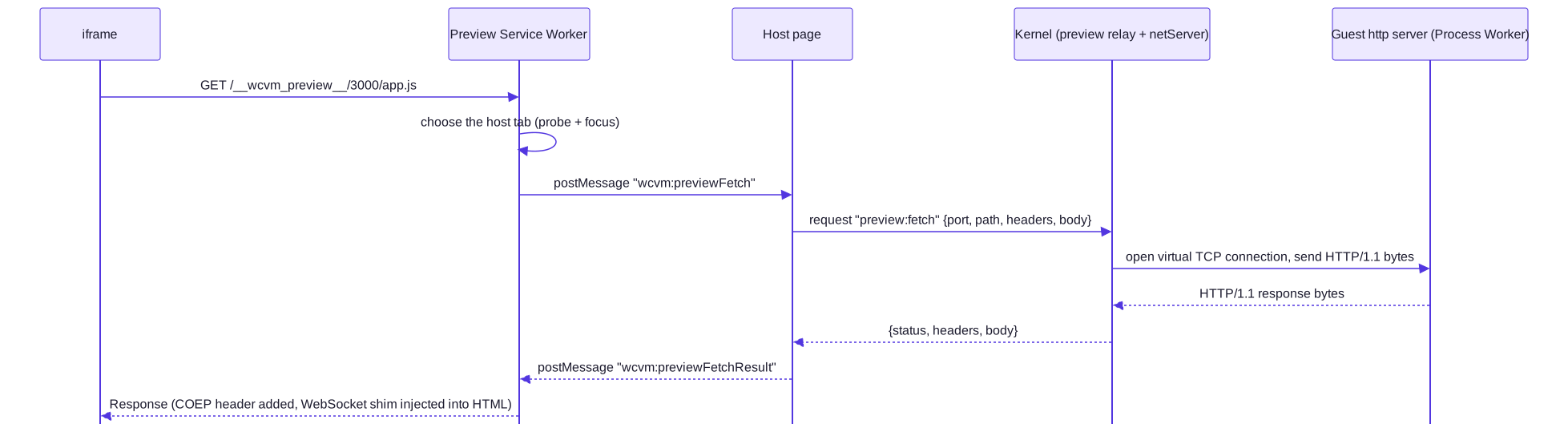
Why it is shaped this way:
- A Service Worker cannot talk to a dedicated Worker, only to a window client, so it relays through the host page.
- Which tab? One Service Worker serves every tab of the origin, and a navigation carries no hint of its embedder. With several wcvm pages open the worker asks each (
wcvm:previewProbe) whether it has a server on that port, then prefers the focused, then visible one. This is a heuristic when two tabs listen on the same port. - Claiming. A worker claims pages only when it first activates, so
enable()sendswcvm:previewClaimto claim a page that loaded uncontrolled (hard reload, "Bypass for network"). - Absolute paths. A page at
/__wcvm_preview__/5173/asking for/src/main.tswould escape the prefix. The worker records which clients are previewed documents and redirects (307) their un-prefixed same-origin requests into the prefix, so each resource has exactly one URL. - COEP. The host page is
require-corp, so an iframe's own response must also declare COEP; the worker adds it to every response. - WebSockets never reach a Service Worker. A small shim injected into each previewed HTML document hands the host a
MessagePort; the kernel's tunnel (kernel/previewWebSocket.ts) is a real RFC 6455 client to the guest'supgradehandler. This is what makes Vite's HMR work.
8. Filesystem and persistence

- One owner. Only the FS Worker touches the
Vfs, so there are no locks: syscalls are served one at a time. - Watching.
fs.watchreceives real push events from theVfs(andwatchFilepolls). One logical save reports one change event. - Persistence is write-behind. A syscall answers before its OPFS write finishes. The queue applies changes strictly in the order they happened (an unordered mirror let a slow first write land after a fast second one).
wc.fs.sync()is the matching completion signal, because write-behind is only safe if callers can ask "are you done". - Restore before mirror. Restoring recreates the tree through
Vfsmutations; if the mirror were already listening it would write it all straight back. - Lazy restore (
lazyDepth) restores directory structure first and each project subtree the first time a path under it is touched. - Symlinks live in a side manifest, since OPFS has none. Deleting a locked entry is retried briefly.
9. Package manager and fetching
npm install (src/programs/npm/) resolves versions with its own semver, reads packuments from the registry, and downloads tarballs through wc.fs.fetch into the VFS (on the Fetcher Worker, so the bytes never pass through the main thread), then unpacks them. It is deliberately not real npm: no lockfile, no lifecycle scripts, no workspaces. Real npm was investigated and deferred because its fetch stack has no path to a real network from inside the virtual net.
10. Studio (apps/studio)
Studio is a client of the public API, not part of the library:
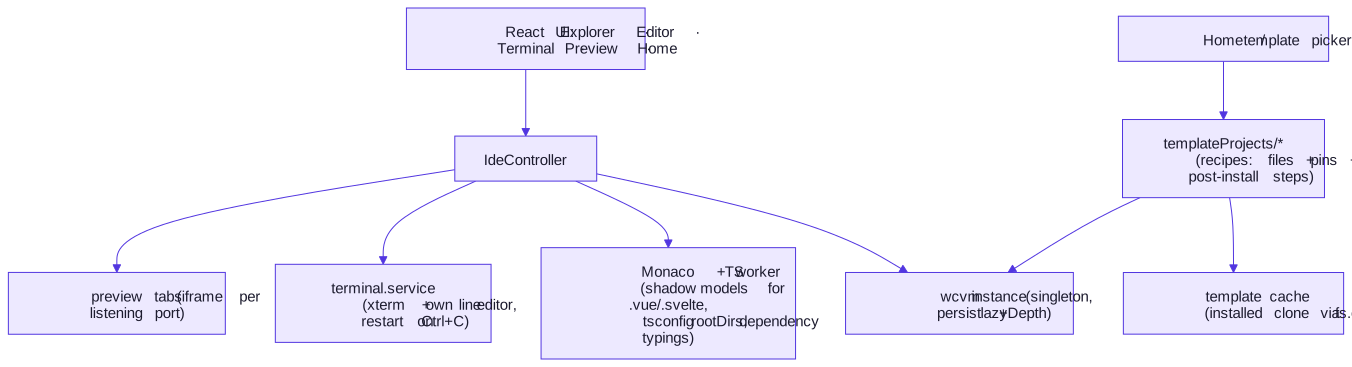
Project templates are recipes: the files, the pinned versions that make a framework run here (Vite 7, WebAssembly builds of esbuild/rollup), and any step a skipped postinstall would have done. The first install of a template is cached as a clone inside the VFS, so later projects are created with one fs.cp.
11. Invariants and gotchas that shaped the code
| Rule | Why |
|---|---|
Never edit runtime/node/lib/** | It is generated from Node's source and checksum-verified. Fix the binding instead. |
Test worker/SAB/eval changes in real Chromium | Node accepts things browsers reject (e.g. TextDecoder.decode on a SharedArrayBuffer view). |
A binding never calls a global (queueMicrotask, setTimeout) by bare name | globalObject: self puts Node's same-named wrappers on the real global; capture the native function at import time or it recurses. |
Dispatch anything that can reach guest code with loop.post() | A synchronous process.exit() thrown from a raw platform event escapes the runtime's uncaught-exception handling. |
Buffer#slice returns a view | Copy with copyBytes where a copy is meant. |
| Files loaded directly by Node (worker fixtures, scripts) use erasable TypeScript | No enums or parameter properties. |
| When skipping part of Node's bootstrap, re-read the whole skipped function | The fd-open call was skipped for fork(), and the ref()/unref() wiring next to it was lost with it. |
net.TCP.port is not "is this the server" | An accepted connection also carries the server's port; use an explicit listening flag. |
| Ref the loop on the operation that starts async work | A connect() that is not ref'd until it succeeds lets the process exit first. |
12. Where to change things
| To... | Do this |
|---|---|
| Add a Node built-in module | Name it in runtime/node/manifest.json, run node scripts/vendor-node-lib.mjs (or scripts/discover-node-lib.mjs <id> to find missing bindings). Implement missing binding members with Node's exact semantics and return codes in runtime/bindings/. |
| Add a built-in command | A function in src/programs/, registered in programs/builtins.ts. Use a getter for any entry that can reference its own registry (sh). |
| Add a filesystem syscall | An opcode in protocols/syscall.ts, the server handler in fs/FsServer.ts, the client call in fs/fsClient.ts, and a binding in runtime/bindings/fs.ts. Keep the request inside the 1 MiB window. |
| Add a kernel-side syscall | An opcode >= KERNEL_OPCODE_MIN, served in kernel/kernelSyncServer.ts. |
| Add a framework template | A recipe under apps/studio/src/services/wcvm/templateProjects/, verified by an opt-in Playwright case (WCVM_E2E_VITE=1). Bump CACHE_SCHEMA_VERSION if a cached clone could go stale. |
13. Repository map
packages/core/            the published `wcvm` library
  src/boot.ts, apis/      public API (boot, spawn, fs, preview)
  src/bridges/            host <-> kernel messaging
  src/kernel/             process table, virtual network, preview relay, sync servers, fetcher host
  src/fs/                 Vfs, FsServer, fsClient, OPFS persistence
  src/protocols/          the syscall ABI, preview and diagnostics protocols (dependency-free)
  src/programs/           echo/cat/.../sh/npm/node
  src/runtime/            the Node runtime (bindings, loaders, event loop, vendored lib)
  src/workers/            entry points: kernel, fs, process, fetcher, preview
apps/studio/              the in-browser IDE built on wcvm
examples/playground/      demo and the Playwright end-to-end suite (real Chromium)